
Sub-Zero Refrigerator Door Won’t Close Properly: Hinges, Gaskets and Alignment Problems
August 14, 2026
Sub-Zero Sealed System Repair: Compressor, Evaporator and Capillary Tube Explained
August 15, 2026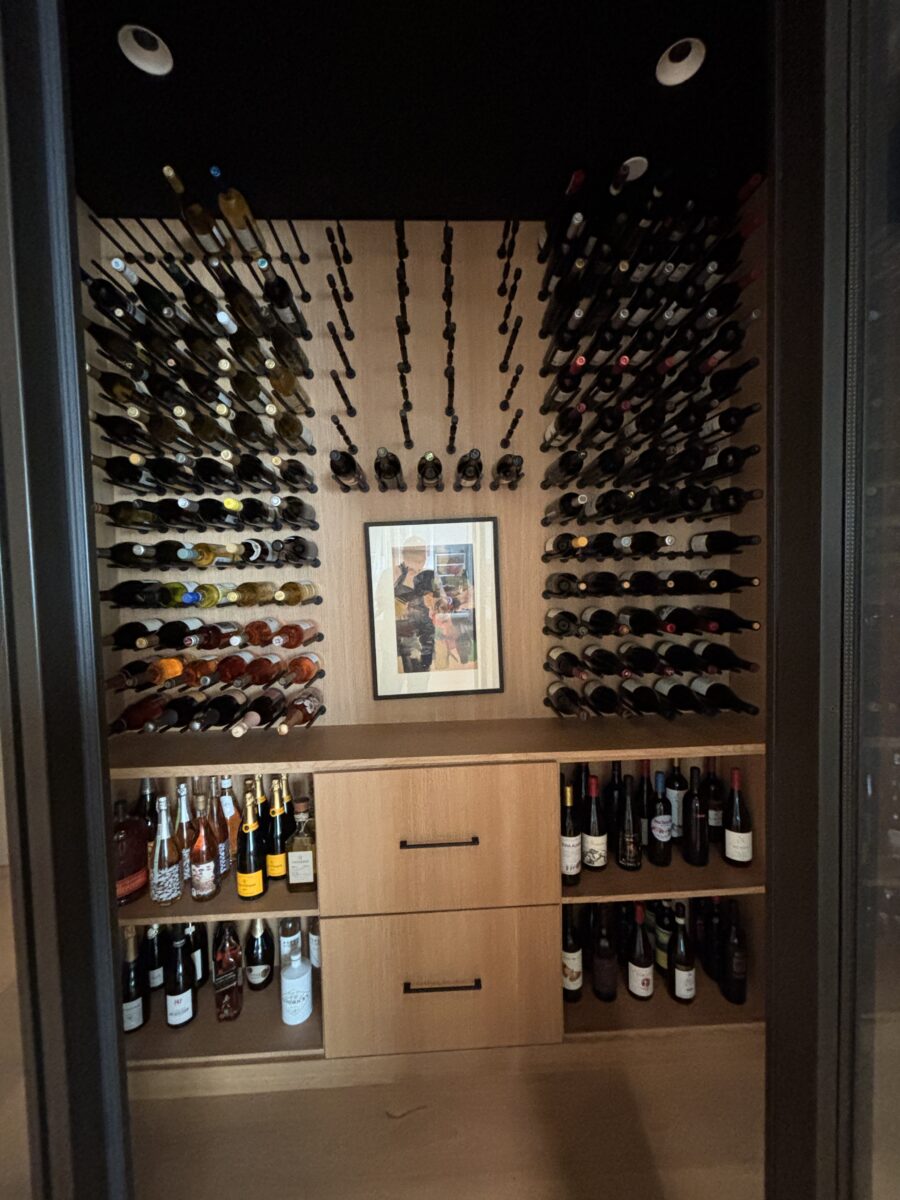
A properly functioning wine cellar cooling unit is designed to maintain the stable temperature and humidity conditions necessary to protect a valuable wine collection. But when moisture is not properly controlled or drained, even a high-quality wine cellar cooling system can suffer extensive damage.
We are seeing an increasing number of wine cellar cooling units with rust, corrosion, clogged drainage systems, and refrigeration component failure. One contributing factor has been periods of unusually humid weather in Southern California, which can significantly increase the amount of condensation a wine cellar refrigeration system must manage.
In many cases, the problem isn’t simply a failed thermostat or compressor. The underlying issue is excess humidity combined with inadequate or restricted condensate drainage.
How Humidity Damages a Wine Cellar Cooling Unit
Wine cellar cooling systems naturally remove heat and moisture from the cellar air. As warm, humid air passes across the evaporator, condensation forms and must be collected and properly drained away from the equipment.
When a wine cellar condensate drain becomes clogged, restricted, improperly routed, or unable to handle the amount of moisture being produced, water can remain inside the cooling unit.
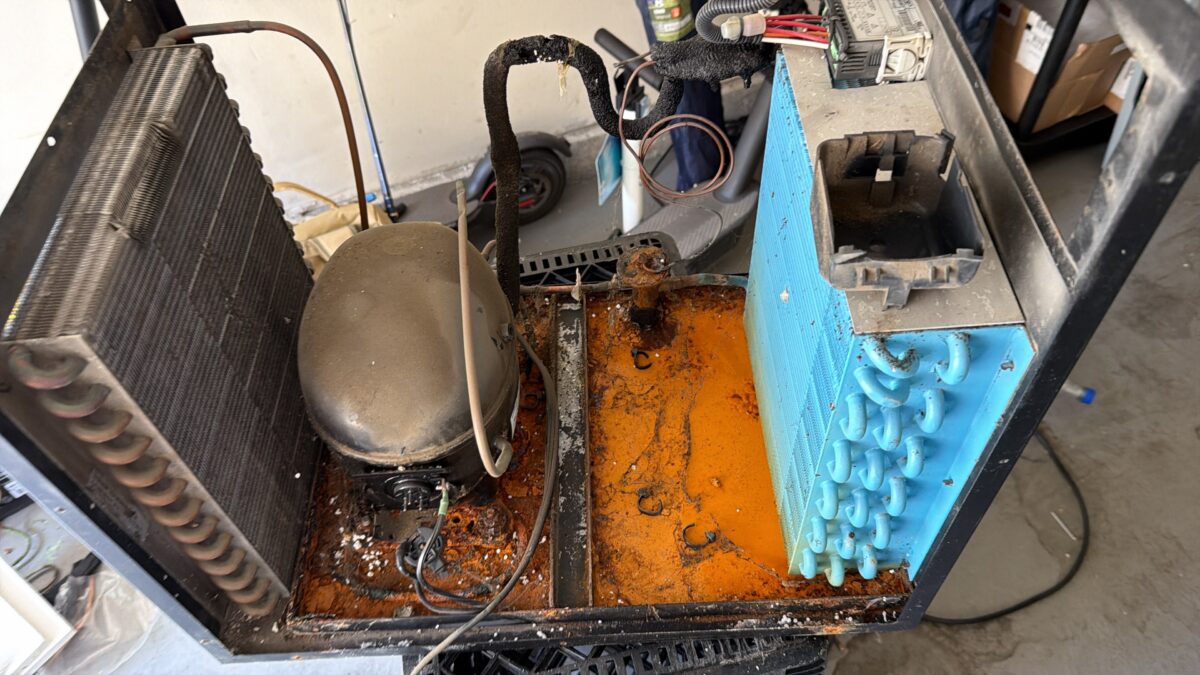
Over time, continuous moisture exposure can cause significant corrosion.
The photographs shown here are from an actual wine cellar cooling unit we removed for repair. Once the unit was removed and disassembled, extensive rust and corrosion became visible inside the equipment.
Moisture-related deterioration can affect:
- Refrigeration and capillary tubing
- Condensate pans and drainage components
- Compressor mounting areas
- Copper refrigeration lines and connections
- Evaporator and condenser components
- Electrical connections and controls
- Fan assemblies
- Internal structural components
Eventually, the wine cellar cooling unit may lose capacity, run continuously, leak water, experience refrigerant restrictions, or stop cooling completely.
Signs Your Wine Cellar Cooling System May Be Failing
A wine cellar refrigeration problem often develops gradually. Common warning signs include a wine cellar not reaching the set temperature, unusually long cooling cycles, excessive condensation, water around the cooling unit, unusual noises, visible rust, inconsistent temperatures, or a cooling system that runs continuously without adequately cooling the cellar.
Simply replacing a thermostat or adding refrigerant may not correct the underlying problem if corrosion, restricted capillary tubing, or drainage failure is responsible.
A professional wine cellar cooling system diagnostic should determine not only what component has failed, but also why it failed.
Popular Wine Cellar Cooling Systems We Service
Wine cellar refrigeration equipment comes in several configurations, including through-the-wall cooling units, ducted systems, split refrigeration systems, and custom wine cellar climate-control systems.
We diagnose and repair many popular wine cellar cooling systems, including WhisperKOOL, CellarPro, Allavino, Wine-Mate, Breezaire, and other residential and commercial wine cellar refrigeration equipment.
Whether you have a WhisperKOOL wine cellar cooling unit not cooling, a CellarPro system experiencing excessive condensation, an Allavino cooling system with corrosion, or a Wine-Mate or Breezaire unit experiencing temperature problems, the first step is a comprehensive diagnostic evaluation.
Why Humidity and Drainage Are Becoming a Bigger Concern
Southern California wine cellars have traditionally operated in a relatively dry climate. However, periods of unusually humid weather can substantially increase condensation inside a wine cellar refrigeration system.
A drainage system that performed adequately under normal conditions may struggle when moisture levels increase.
If condensate cannot leave the equipment efficiently, water can accumulate inside the cooling unit and remain in contact with metal components for extended periods.
The result can be exactly what is visible in these photographs: severe internal corrosion and deterioration caused by prolonged moisture exposure.
Can a Corroded Wine Cellar Cooling Unit Be Repaired?
In many cases, yes.
A damaged wine cellar cooling unit does not necessarily require complete replacement. Depending on its condition, the system may be professionally removed, rebuilt, and returned to service.
Our repair process begins with a complete diagnostic evaluation. When significant internal damage is identified, the cooling unit is carefully disconnected and removed from the property and transported to our refrigeration shop.
At the shop, the unit is disassembled so that corrosion and hidden damage can be properly evaluated. Depending on the condition of the system, repairs may include replacement of corroded refrigeration components, capillary tubing, damaged copper lines, drainage components, electrical parts, and other humidity-damaged components.
The refrigeration circuit is then cleaned and prepared, repaired as necessary, evacuated, leak-tested, and recharged with the appropriate refrigerant.
After rebuilding and testing, the cooling unit is transported back to the property, reinstalled, and commissioned. We then verify temperature performance, airflow, drainage, and overall system operation.
Wine Cellar Cooling Unit Repair vs. Replacement
Whether a cooling unit should be rebuilt or replaced depends on the extent of the corrosion, availability of replacement components, age and condition of the equipment, and overall economics of the repair.
Our objective is to determine the most practical solution—not automatically replace equipment that may still be professionally repairable.
If your wine cellar cooling unit is not cooling, leaking water, running continuously, experiencing excessive humidity, or showing signs of rust or corrosion, have the system inspected before additional damage occurs.
Schedule a Wine Cellar Cooling System Diagnostic
If you are experiencing problems with a WhisperKOOL, CellarPro, Allavino, Wine-Mate, Breezaire, or other wine cellar cooling system, our technicians can diagnose the problem and determine whether the unit can be repaired or rebuilt.
Call 213-290-0477 to schedule an appointment with an expert wine cellar refrigeration technician.
We provide professional wine cellar cooling unit diagnostic, repair, rebuilding, removal, reinstallation, and replacement services for residential and commercial wine cellars throughout Southern California.
The goal isn’t simply to make the cellar cold again. It is to identify why the cooling system failed, correct the underlying problem whenever possible, and restore the controlled environment needed to protect your wine collection.